
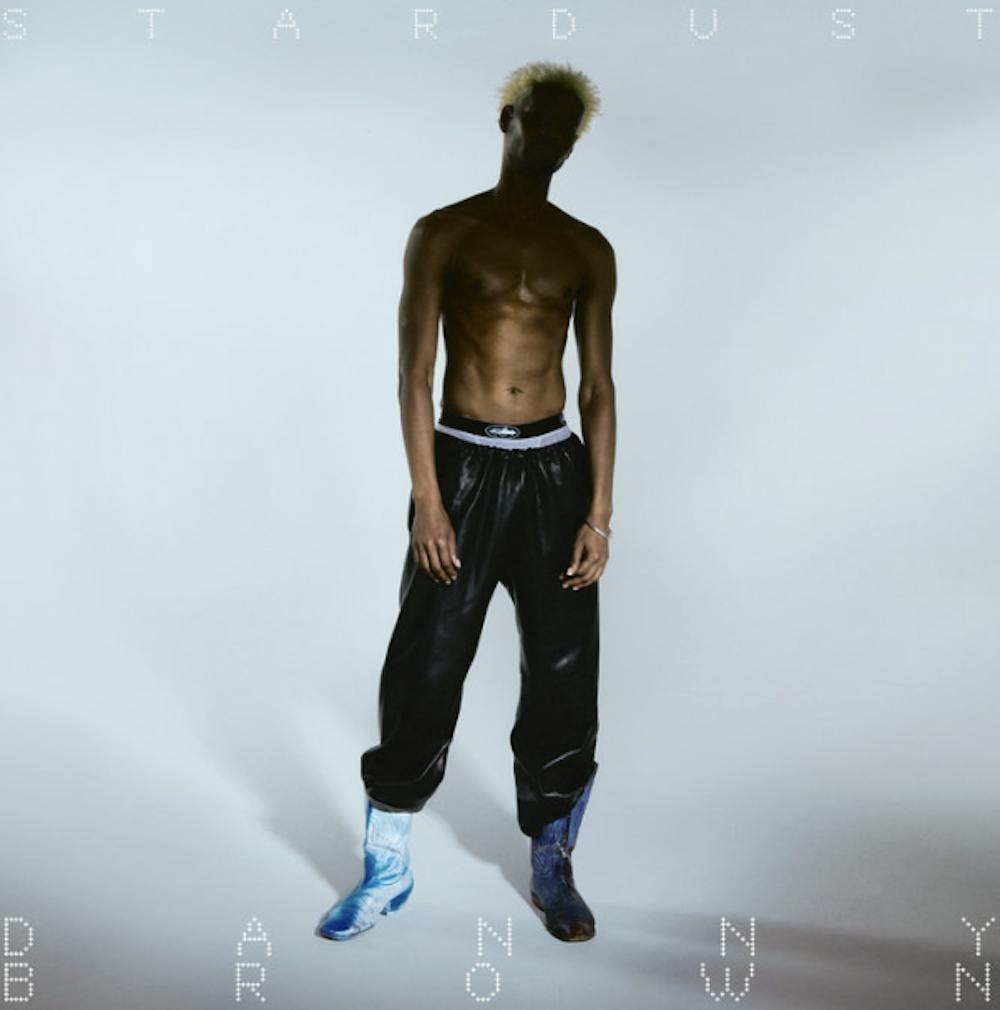
-- Danny Brown’s relationship with his art runs uniquely deep. Few critically successful artists can carry true passion, creativity, and impact into their later years, turning what is expected of them into reimagined pursuits of self-discovery. David Bowie managed it with his experimental final album, “Blackstar”; Nick Cave has been doing it for decades – but Danny Brown, not even elderly, may have found his formula for artistic longevity: continual reinvention. Life doesn’t work without change, and really, neither does art.
From his beginnings in 2000s Detroit, Danny Brown reveled in his stark peculiarity. His absurd personality -- famously declining a contract with 50 Cent because he refused to ditch his skinny jeans -- made him a singular presence in hip-hop; the unorthodox yelp in his vocal style undoubtedly had an impact on his mainstream access, as well. His breakout 2011 mixtape, XXX, got its name because he had just turned thirty years old, an already unusual age for a rap career to take off. There’s no one quite like Danny Brown, but that’s what’s made his output over the last fifteen years so captivating. He’s taken so many left turns that he’s basically just going in a circle, but one so big that he never ceases to pass something new. Even when listeners expect the unexpected, Danny avoids predictability.
His sixth studio album, Stardust, emerged under circumstances nearly opposite those long defining his image. For more than a decade, Danny’s “missing teeth” and “unkempt hair” felt like visual extensions of the chaos in his music – chaos rooted in addiction and mental illness. Through the 2010s, Danny helped pioneer new sounds as quickly as Taylor Swift put out remixes; though, the excellent music created during this period was inextricable from his intense mental struggles and instability.
Everything changed after Danny entered inpatient rehab in March 2023, where the rapper got sober and stayed that way. His newfound lease on life has coincided with his boldest artistic direction yet -- an uproarious embrace of hyperpop. Stardust was released on November 7, 2025, but Danny had been inching towards this musical pivot since last year, featuring on songs by staple hyperpop figures like Frost Children, Jane Remover, and 8485. Over glitchy, EDM-steeped production, Danny’s natural zaniness is given new life, as if we’re hearing what he was made for all along.
At 44, Danny Brown has done what most rappers his age wouldn’t dare: make an album built entirely on new sonic ground, alongside a team of collaborators from the LGBTQ+ community who’ve shaped hyperpop’s identity. His leap is ambitious and exciting, but did he pull it off?
Yeah, mostly. The growing pains stem not from hesitation, but from Danny’s commitment to flesh out his vision as holistically as possible. Tracks like the multi-part banger "Starburst” sit alongside the hip-house grooves of “Lift You Up,” two completely different EDM flavors that highlight the breadth of influence across the tracklist. The emotional and tonal range extends far beyond both, though.
Opener “Book of Daniel” sees Danny rapping with utmost clarity. In a single, unbroken verse, he discusses life, purpose, and the miracle of music as both a guiding force and a safety net. He traces his pain and subsequent recovery until Quadeca’s gospel-like harmonies serenade the song’s crescendo. This introspective first track was already unexpected, but sets Stardust’s life-affirming tone, which just so happens to also fit a club atmosphere.
From there, the songs range from bouncy, low-key tunes (“Flowers,” “Green Light”) to hardcore computerized chaos (“1999,” “Whatever the Case). Neither prevails over the other, because how one track may falter is how another succeeds. Some of the more relaxed songs -- “RIGHT FROM WRONG,” “All4U” – tackle meaningful topics yet lack the punchiness that makes hyperpop, well, hyper.
Alternatively, the underscores-assisted “Copycats” and “Baby” are standouts because of their brilliant fusing of Danny’s unorthodox rapping with the danceable madness at hyperpop’s core. Sadly though, aside from underscores and a few other standouts, Danny’s collaborators often fall short of the capabilities displayed in their solo material. 8485 and Frost Children, on “Flowers” and “Green Light,” pull back more than expected, failing to strike their individual memorability. The tamer performances aren’t bad, just underwhelming in a genre rooted in raw eccentricity.
Still, Stardust’s sensitivity is integral to its meaning. The nine-minute penultimate track, “The End,” is the longest and, arguably, most in-depth song in Danny’s entire catalog. Over frantic jungle-influenced drum and bass, Danny spills stream-of-consciousness reflections from the perspective of someone facing death -- perhaps symbolic of an alternate timeline in which he never escaped his addictions. Its 3-part structure, incorporating both a performance in polish from musician ta Ukrainka and a hopeful monologue from Angel Prost of Frost Children, “The End” relates the eternal quality of art to the finality of physical existence. But it isn’t about finality; rather, how endings can lead to new beginnings.
That’s Stardust in a nutshell – a benchmark for Danny Brown that cannot exist without the difficulties that led to it, nor without Danny’s persistence to keep moving forward. Despite some of Stardust’s awkward or under-baked compositional elements, the passion Danny has for his art is unmistakable, evident in his relentless boundary-pushing evolution. He doesn’t just adore hyperpop, but music altogether. He not only celebrates life, but what humanity can bring to it. Stardust may not be one of 2025’s best rap releases, but that doesn’t make it any less beautiful.
7/10


