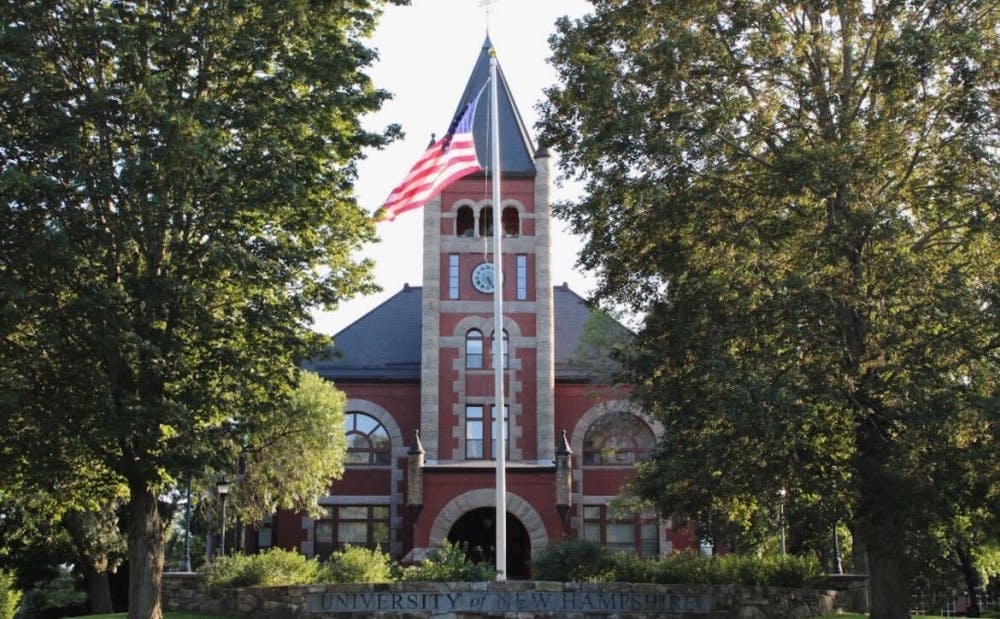
According to University of New Hampshire leaders, House Representative Sam Farrington’s Campus Carry Bill (HB 1793) would not necessarily have an impact on crime, but has the potential to cause more fear within the UNH community.
Currently, the University System of New Hampshire (USNH) has policies in place restricting the possession of firearms and non-lethal weapons on campuses. HB 1793 would take these restrictions away, meaning students, faculty and staff at USNH campuses would be allowed to carry weapons on campus
Tama Andrews, a professor of U.S. politics at UNH, said that arguments favoring the bill generally say that students and staff will be better able to protect themselves in a mass shooting if they are allowed to carry guns.
She said that much of the United States is considering this as an option to protect schools.
“It's an issue that is nationwide,” said Andrews, “arming schools as a means to deter or take out a shooter.”
UNH Dean of Students Michael Blackman said that campus carry could make members of the community feel unsafe.
“Our longstanding prohibition on firearms reflects what we believe best supports our residential community,” said Blackman. “Campus carry laws have not been shown to reduce violent crime, but they have consistently been shown to make most campus community members feel less safe — with real consequences for how students engage in class and how faculty choose to teach.”
Interim UNH Police Chief Mark Collopy said that New Hampshire is an open carry state, and a law like this would not change the way the UNH police approach situations where there could be a weapon involved.

“An officer never knows if an individual is carrying a weapon,” said UNH Police Chief Mark Collopy. “The fact that USNH's no weapon policy exists does not change the mindset of our police officers to be keenly aware of their surroundings and the individuals they encounter.”
Currently, UNH Police receive a very small number of weapons-related calls. Collopy said that from 2023 to 2025, only three calls were made involving weapons. In these three calls, nobody was found to violate the law.
Collopy said that the UNH Police Department is concerned with a few other aspects of the bill.
“When these weapons are not being carried, where will they be safely stored?” said Collopy. “Should an active threat occur on campus and police are to respond, how will those who are in possession of a lawful weapon react during the incident and when the police arrive?”
Collopy said that this law could cause an uptick in weapons calls, even when no law is violated.
“The lawful display or the concealed weapon could cause alarm and disturbances in the classroom, public spaces, and dormitories where the police would be requested to respond to mediate the situation,” said Collopy. “Ultimately, if the person is complying with all applicable laws and policies, there will be no action taken, and individuals would take exception with the police's response or lack thereof.”
HB 1793 is sponsored by Republican representatives and passed through the House of Representatives on Feb. 5. Tama Andrews said that the Senate has yet to hear the bill, but it is likely to pass because of the party’s control of the NH General Court.
As of Feb. 24, the Senate has not yet scheduled a hearing for HB 1793. Members of the community, including UNH students, are able to attend these hearings and talk to lawmakers directly.
“The public hearings are for everyone,” said Tama Andrews. “Everyone can go. Everyone can testify. They like it, as long as people are to the point, and say what they have to say without rambling on and on.”