
While it isn't a secret, college campuses have access to drugs and alcohol. Students use drugs illegally and drink underage. Some places deem it a big issue, while others don’t.
According to the 2024 Monitoring the Future survey, in 2023, young adults aged 19–30 had historically high prevalence levels of cannabis, vaping cannabis and nicotine, and hallucinogen use. The National Library of Medicine shares that “New Hampshire (NH) has had among the highest rates of fentanyl-related overdose deaths per capita in the United States for several years in a row—more than three times the national average in 2016.” As of 2024, New Hampshire has had a total of 282 deaths due to overdoses. The University of New Hampshire (UNH) provides many ways for students to stay informed, make informed choices, and try to stop the abuse of drugs.
When it comes to drug use, they hope to “create an environment that supports no use or low-risk use,” shares Kathleen Grace-Bishop, Director of Health & Wellness Education & Promotion. Bishop shares how she aims to foster a culture that promotes health and well-being. Health and Wellness wants to create change and reduce harm for students and the community. Their goal is to “Minimize risk,” said Bishop.
According to health and wellness, the most used drug on campus is alcohol. The National Center for Drug Abuse Statistics website shares, “Alcohol causes 13.5% of deaths among 20- to 39-year-olds.” According to the 2025 University of New Hampshire Annual Security and Fire Safety Report for Durham, NH, there were 156 arrests on campus property, public property, and in on-campus residential areas. There were also 1,021 disciplinary referrals issued on campus property or in on-campus residential areas.
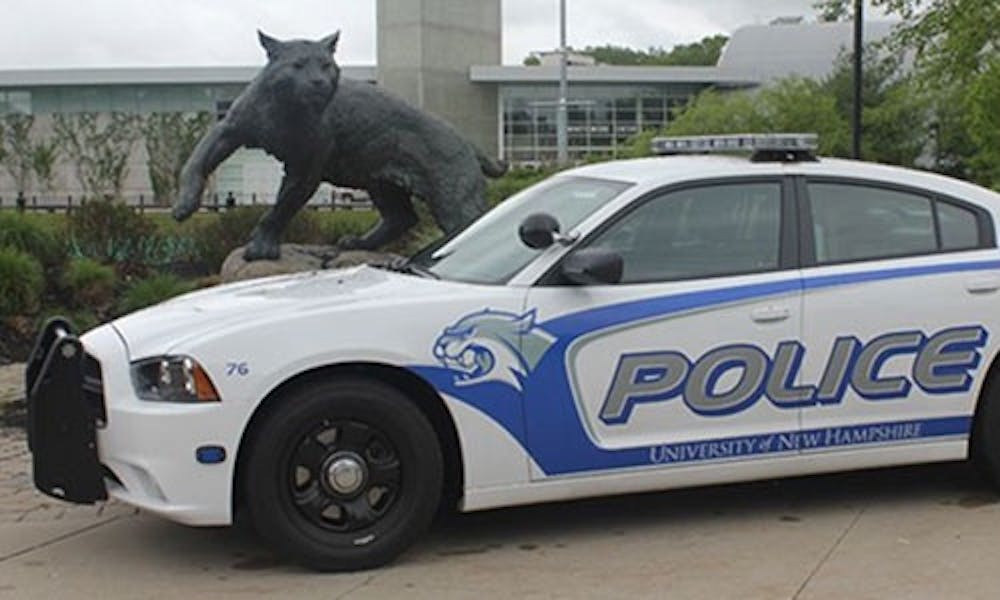
When it comes to police calls on campus, Captain Mark Collopy, operations division commander of the UNH police department, says it's easy to tell when alcohol is involved.
“We obviously take a community caretaking approach. Right off the bat, taking criminal elements, they're 19, intoxicated, putting that aside. What do we need to do to take care of this person and make sure that they're safe, and then we could deal if we want criminal elements or violations,” said Collopy
Students are “Following a national trend where people in the United States are drinking less and less often, and smaller amounts when they do drink, and college students are reflecting that as well, including ours so far,” said Bishop.
Tessa Marinello, the head of the health and well-being committee for the student senate, said her council is actively looking for ways to prevent harm among students when it comes to drug/alcohol abuse. “Thankfully, there has been a national trend of lower abuse of drugs and alcohol, too. However, one person passing from misuse and abuse of these substances is too much,” said Marinello
Other councils in the Senate are also working hard to write resolutions to combat heavy alcohol use and abuse. The community development council is currently theorizing ways to improve Homecoming, Family Weekend, etc., to have them centered more around community building as opposed to drinking,” said Marinello
Health and Wellness has many ways to approach students about the use of drug abuse. “Well-being wheel as the framework for the work we do with students,” said Nancy Bushinsky, our Alcohol, Nicotine, and Other Drug Educator/Counselor.
Found on the UNH Health and Wellness website, the Wellbeing Wheel “can be used as a tool to check in with your wellness to better understand what is going well and what may be challenging.”
Using that wheel as a starting point, staff will “look at how substance use will affect different aspects of their well-being and how that is seen through both their values and the fact that their identities can have an impact on how they're doing,” said Bushinsky.
Health and Wellness are heavily based on research and data-accurate information. “Deep dive into the research, and what's relevant to college students,” said Bushinsky. The Health and Wellness website shares important information regarding drug use, such as reducing harm and preventing overdoses, substance use and recovery information, what addiction feels like, recovery services at Health & Wellness, and much more valuable information to the student body regarding drugs.
In addition, health and wellness have also worked on students being able to access Narcan and Fentanyl Test Strips. These are located in certain residence halls and apartments. The website shares where they are located and other options off campus. There are also videos provided on how to test.
“My council is trying to work with the leadership of fraternities and sororities on campus to have Narcan and educational sessions about fentanyl in the off-campus houses,” said Marinello
Health and Wellness gets a lot of its statistics from the American Health Association’s National College Health Assessment (ACHA-NCHA3), which is a biannual survey made to collect data on a wide range of health and wellness issues. The 2025 report is set to be sent out on November 2nd, and the data is set to come out in December.
Students who come to Health and Wellness regarding drug use come from many aspects. While some come in on their own, others are referred to them from places/organizations like Community Standards, both Durham and UNH Police departments, PACS, and Athletics.
When a student comes to receive support, the staff works with them. It becomes student-driven, too. It is focused on whether they are ready to change.
Health and Wellness has produced its One Pill Can Kill campaign. This was sparked by drug issues happening around the state. The campaign emphasizes the importance of only doing prescription medication and information, such as “Don’t rely on a previous source or experience. Knowing where your drugs come from doesn’t mean they’re safe. Even if you have used the same drugs before, your body can react each time differently… There's no guarantee of what's actually in illicit drugs (e.g., cocaine, cannabis), including those obtained outside a pharmacy (e.g., Xanax, Adderall). The DEA found that 42% of pills they confiscated and tested contained at least 2 mg of fentanyl—a potentially lethal dose.”
Collopy shares that UNH police have not gotten calls related to harder drugs on campus this year, such as opioids; he feels as if there isn't a sense of hard drug use on campus.
“And I say that with hopefully, maybe some naivete, but with some confidence that there's no indication of that. In my experience, if somebody has an opioid issue, it's very clear and apparent, and I don't think they'd have a very successful time,” said Collopy
He does highlight the dangers of opioid and fentanyl use. “It is one of the most hideous drugs that are there because of the ramifications. I mean, like any opioid, the element of addiction exists. But certainly, if your body isn't equipped to handling a high dose, or high potency, if you will, of an opioid, it can make you very sick really fast, “ said Collopy
The university also has organizations such as Wildcat for Recovery, which is an “initiative to support students with substance use challenges. We envision a future in which all UNH students have access to information, services, and support to help them make healthy choices about their use of drugs and alcohol.” They offer support such as Weekly peer recovery meetups,1:1 peer support, Assistance connecting to campus or community supports, e.g., tutoring, counseling, social groups, food/ housing resources, Weekly substance-free social events, Educational programming, and Family/ caregiver supports
“Wildcats for Recovery offers a space for students to reflect on their relationship with alcohol and other drugs and mental health challenges through a variety of supports provided by students and staff trained to empower participants to make informed choices that are right for them,” said Heather Morris, UNH Supportive Recovery Campus Coordinator.
Wildcat for recovery is open to all and any students, “we encourage any student looking to explore their relationship with substances, with loved ones who struggle with substance use, or individuals simply looking to connect without the influence of alcohol or other drugs,” said Morris.
While many college campuses are faced with the use of drug and alcohol abuse, the university's efforts to keep students safe and informed about the dangers of drugs set the campus apart.


