
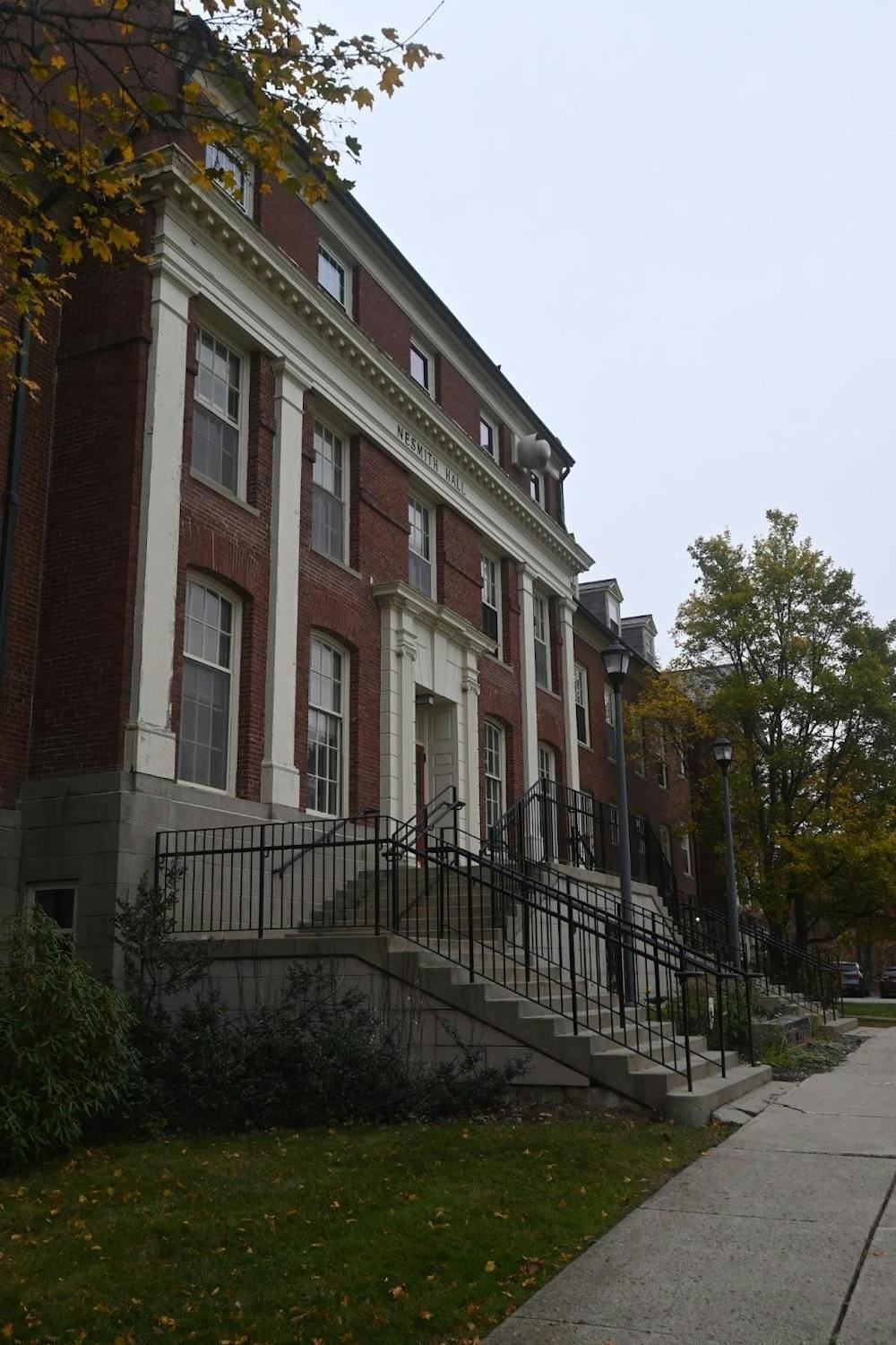
DURHAM - To manage rising operating costs, the University of New Hampshire (UNH) has proposed mothballing six university buildings. In phase 1 of the university's proposed plan, 2 Leavitt Lane, Conant Hall, Morrill Hall, Nesmith Hall, Taylor Hall, and Wolff House are on the chopping block. If closed, the programs housed in each building such as Conant’s TRIO scholars, a federal program that supports first-generation and low-income students, and UNH’s Sustainability Institute at Nesmith will be relocated.
While the university has yet to confirm the official closures of the buildings, those that could be vacated more quickly would be swept empty by January 2026, while the rest would be scheduled for June.
“What we’re trying to do is right-size our campus footprint with our student population,” said Executive Director of Campus Stewardship and University Architect Ken Weston. “That has been declining for several years, and we’ve done some planning to consolidate the footprint, and we accelerated those plans this year because of funding cuts.”
Weston explained that university planners used three criteria to determine which buildings should be retired. The first being which programs are easy to move quickly, such as programs that are in simple spaces like office spaces. The second criterion is the total cost of ownership, which is how much it costs to operate those buildings. The last piece of criteria is low net asset value, which Weston explained as the percent of building systems and structures that are in good condition.
“If we close buildings that we want to keep, like Conant, because they have a lot of net asset value, that opens it up for a comprehensive renovation in the future,” Weston said. He also stated that the recent federal cut of TRIO and loss of other scholarships serving first-generation college students was not a factor in closing Conant.
University architects are working with department leaders to facilitate this change and find new space for them on campus, a process that Weston said is going smoothly so far, and as well as can be expected for something so disruptive.
“Decisions like this by the university are always really hard, but I really support the decision by our president and leadership to reduce the footprint of UNH by closing some of these buildings,” said Executive Director of the Sustainability Institute Fiona Wilson. “It’s part of how we make the university financially and environmentally sustainable.”
Wilson expressed her excitement for a new location for the Sustainability Institute, as the current building, Nesmith, is older and out of date for students and staff to work effectively in. It’s one of the least sustainable buildings on campus in many ways and is not energy efficient.
Although the closure of six buildings on a college campus sounds detrimental, both Wilson and Weston have assured that these changes don’t mean that departments are closing, but rather the university wants to be more economically efficient while supporting student needs.
“We’re not going to close a building until we have a plan to reposition those programs. The six buildings are the target, but if we can’t find a scape for the programs that are in them, we won’t close them and might have to pivot,” said Weston.
“Change is always hard, but I think this is an opportunity to make the space better for the work we do,” said Wilson.


