
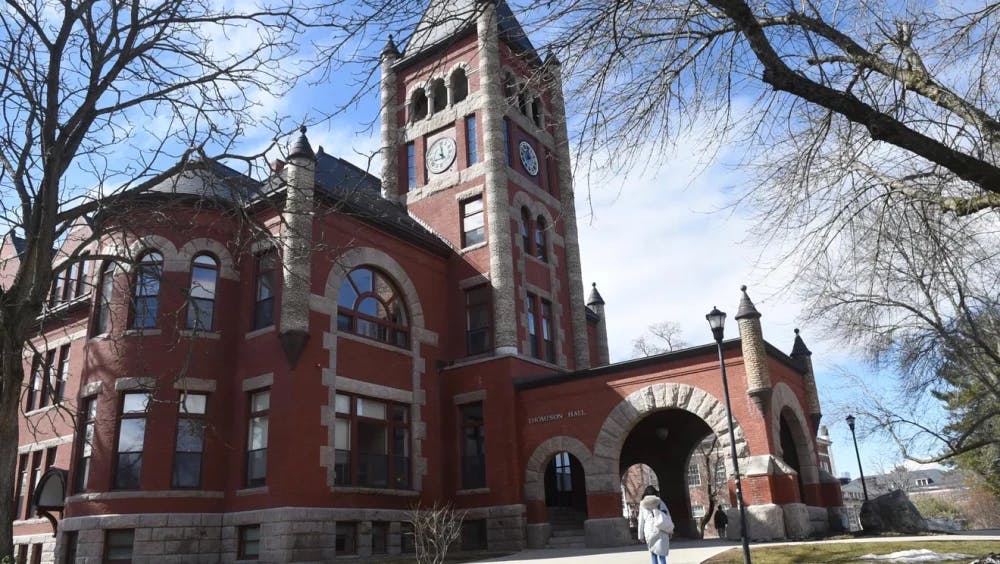
AI can no longer be avoided. As these tools continue to advance, universities across the globe are integrating their usage more and more into their curriculum. The University of New Hampshire is embracing AI.
In order to integrate AI usage into courses, there must be proper policies. Dean of Community Standards, Policy, and Compliance, Alexis Piñero-Benson, who authored the UNH Code of Conduct, said, “They need to understand when AI is permissible and when it's strictly prohibited. What we expect from students is that they will be the authors of their own work, that they will be honest and that they don't misrepresent themselves.”
Fran Keefe, an Instructional Designer at UNH, collaborates with faculty about developing curriculum and assessments. She also leads workshops for professors, such as Leveraging AI in your Class. “These professional development opportunities are ways that they can get better at understanding how to use it in a positive way, and help their students to understand how to use it in a positive way,” Keefe said.
Keefe believes we are moving away from the era of being scared of AI and being hyper-focused on controlling students who attempt to cheat with it.
Ivaylo Nedyalkov, Senior Lecturer of Mechanical Engineering in the CEPS college, is also not afraid to embrace AI. He combines learning-focused non-proctored project assignments for which students leverage AI, with written and oral exam assessments, which enable more accurate grading.
Jennifer Lehmann, Executive Director of the E3 Team (Educational Excellence and Effectiveness), said, “I think it's really important to be clear with students about what your expectations are, also how, if at all, they're using it right. If we're expecting students to be transparent about how they're using it, faculty should also be transparent about how they are using it within their courses.”
Nedyalkov encourages his engineering students to use AI as an editor for writing assignments and to practice how to use it as a tool. “I think what would be important here is for students to recognize that they are not going to be asked to do things that AI can do. So the goal of higher education would be to help students learn how to do the things that AI cannot, and potentially help students learn how to leverage AI for the things that it can do, if prompted correctly,” said Nedyalkov.
Dean of Students, Michael Blackman, said, “The challenge is that artificial intelligence is increasingly built into the software we use. Many students don't understand when it's okay to use and when it's not. As these tools become increasingly pervasive, more faculty are integrating them into their courses and setting clearer expectations about when it's prohibited.”
Dean Piñero-Benson shared how merely forty years ago, math professors were protesting the use of calculators in schools. In the earliest era of AI, a few years ago, there was a lot of pushback in academic settings, and there still is some. He predicts that AI tools such as ChatGPT will act similarly to a calculator. You must still know basic skills and should not heavily rely on these tools, but they are helpful when used responsibly.
“It’s (AI) like learning how to use a calculator, right? If you don't know how to use a calculator and you basically are relying upon that calculator to do your addition, subtraction, and multiplication for you, you're in big trouble if you don't know how to do that,” said Keefe. “So I think it's definitely becoming a foundational skill. The scary part is how quickly it's become a foundational skill.”
With how fast AI is advancing, many careers that UNH students want to go into are using it on a daily basis. Employers are looking for students who are coming out of college with this knowledge of how to use AI in an ethical, productive way.
Lehmann works with UNH faculty on supporting teaching practices that foster learning. She spoke about how they discuss professors’ curricula. “What do you want the students to get out of this? Does it make sense to let them use AI for certain parts of it or not? Or use it as an opportunity to advance the students’ AI literacy and learn about what the output is doing and what's working well and what's not?” said Lehmann.
Transparency and intent are key when dealing with AI.
“Although we haven't noticed major shifts in the total number of allegations of academic misconduct, more and more of a percentage of these allegations are related to generative AI, which requires us to continue refining how we educate students about appropriate use and how we support faculty in setting clear expectations,” said Dean Blackman.
Dean Piñero-Benson said, “We at the university, we are all gonna have to grow around this issue together.”


