
Each month, the University of New Hampshire invites guest speakers in for its department-based Colloquia Series, which is open to all students and faculty.
This fall’s first event featured Dr. Jonathan Phillips, an Assistant Professor in the Department of Psychology and Brain Sciences at Dartmouth College. His segment, which took place on Sept. 18th, focused on the science behind how people think about options.
Phillips began by presenting his recent study methods. He provided participants with different scenarios, for which they had to come up with as many responses and actions as possible. He would then ask them to judge which solutions were best.
Here, Phillips found that humans sort their options into the following criteria: Morality, Probability, and Normality. The options that were most morally and socially acceptable and easiest to deploy were deemed the best. They were also typically the first idea that the participants came up with.
In this regard, “first thought, best thought” seems to apply. We apparently do have intuition, and we should trust it.
This is not the case, however, if you are a college student considering your career options.
“For things like careers and things that really change the course of your life, they are worth spending much time thinking about and exploring,” Phillips said. “If you think of enough options, you will typically come up with one that is better than before, as long as you are willing to put time into it.”
That is not to be confused with overthinking, a term that has risen in public discussion in recent years and describes the overwhelming feeling of reconsidering every option until one is too numb to choose, which often ends with bad ideas.
“Take the first”, Phillips said.
And if you struggle to come up with a “first” to begin with, Phillips reminds us that “you always have options. Oftentimes, when you think you have no options, it’s because you’re only thinking of the obvious ones. If it’s a really important situation, sometimes it’s worth just thinking extremely creatively. What that means is you have to think of a lot of bad options before you get to the good ones.”
Crediting his philosophy training, Phillips always managed to convince himself of the unlimited number of options any person has. You just have to keep in mind that “part of making a decision is thinking of the option you want to pursue,” he said.
Progressing in his research, Phillips plans to explore cross-cultural differences in how people think about options next, and how to utilize artificial intelligence to enhance humans’ option generation, prompting them with ideas they might not have considered before.
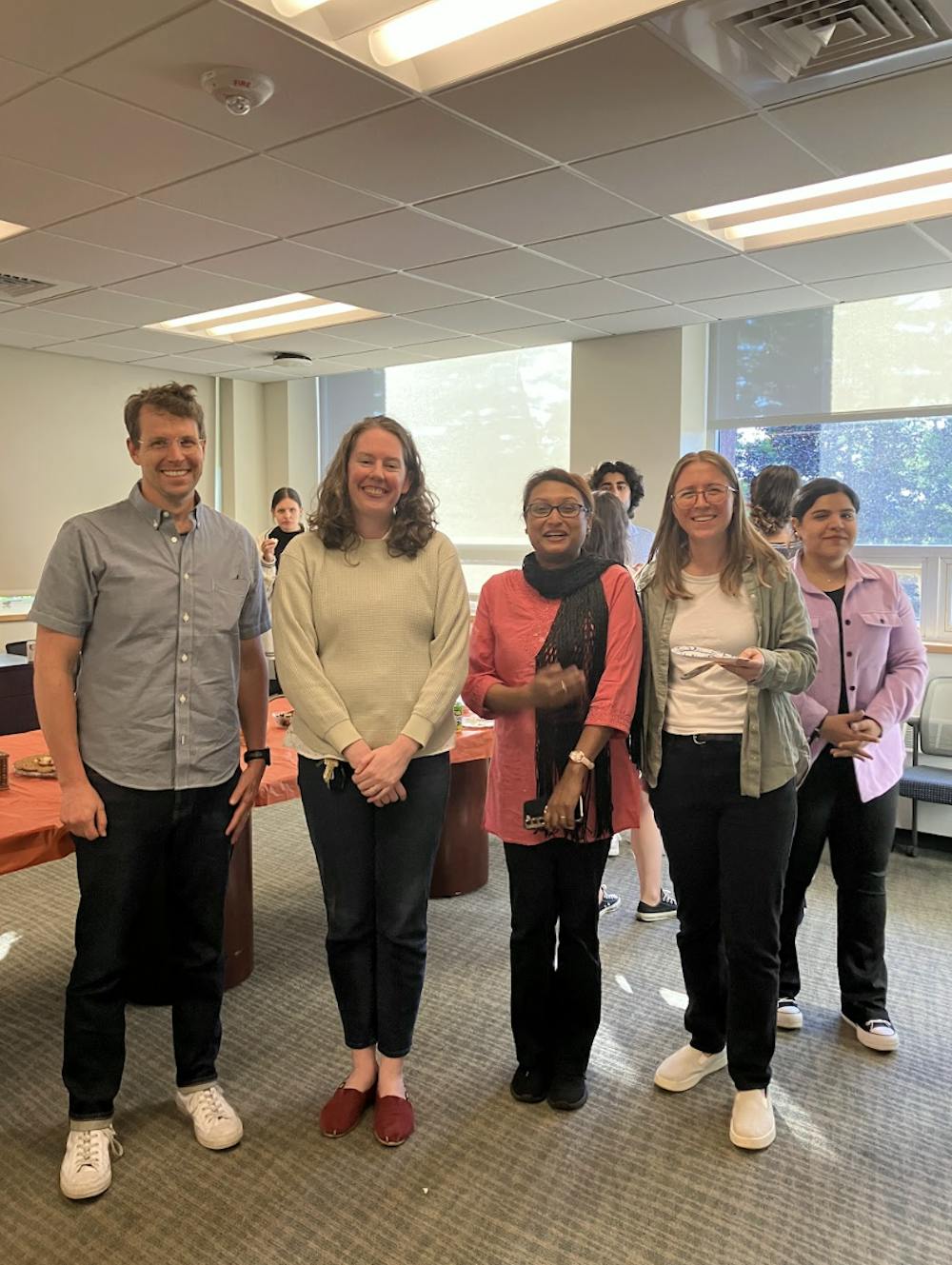
During and after his insightful talk, Phillips allowed for questions from the attending students and faculty, leading to an engaging atmosphere followed by a full reception with baked goods and drinks.
As he returns to Dartmouth College, UNH looks forward to welcoming more speakers to its Psychology Colloquia Series every month, which are open and free to attend for any and all University members. For more information, go to https://cola.unh.edu/psychology/colloquia


