

Navigating the University of New Hampshire campus with a gluten intolerance can be challenging. From the options served at Philbrook and Holloway Commons dining halls to the restaurants in downtown Durham to the accessibility of Hannaford's Supermarket, students have a range of options to explore — but this doesn’t mean the options are satisfying or affordable.
Throughout the dining halls at UNH, there are designated gluten-free food spaces. In Holloway Commons specifically, there is a gluten-free fridge that has separated bagels, bread, pastries, condiments, etc., primarily for breakfast items. However, the options for students without gluten intolerance are significantly higher. Eggs, breakfast meats, and an omelet station, all of which may not be safe for students with gluten intolerance due to potential cross-contamination. Dinner options are even less inclusive. The gluten-sensitive meals are often unsatisfying and lack variation day-to-day.
In light of recent budget cuts, Philbrook dining hall is now closed on the weekends, meaning there is only one dining hall open on Saturdays and Sundays for all of the students to share. This sparks questions not only about the quantity of food, but also the quality of food in general. For students who no longer have dining plans, this is easy to navigate. But for the incoming freshman and sophomores who have gluten sensitivities, what will this do to the already lacking options?
Restaurants in downtown Durham aren’t a cheap option for food by any means, but are they accessible to people with gluten intolerances? Clark’s American Bistro has quite an inclusive menu. Their menus are equipped with either a red star on their dinner menu or a blue star on their breakfast and lunch menu, meaning the item “can be made gluten-free.”
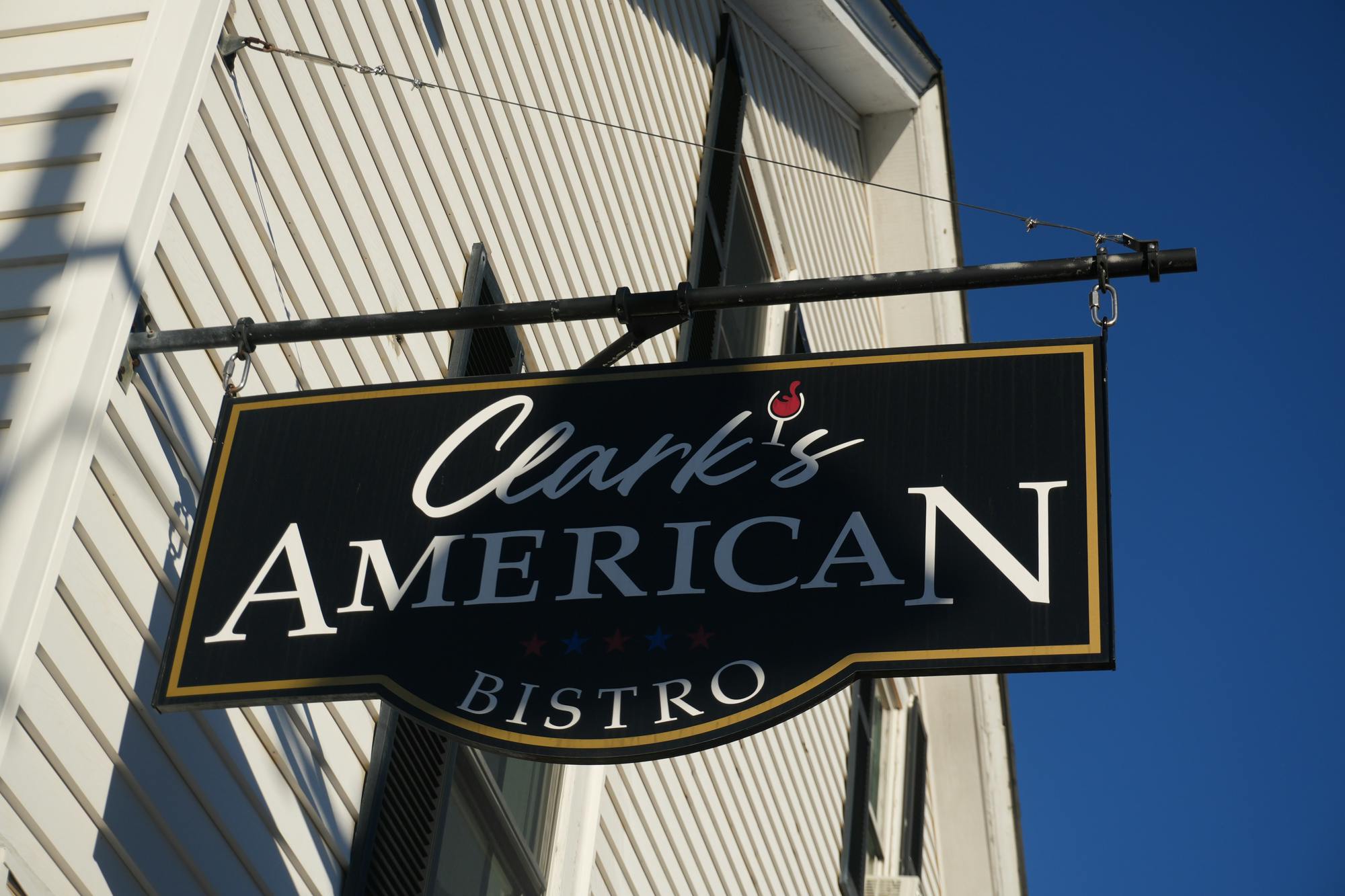
The owner of Clark’s, Kim Clark, has made the environment of the restaurant extremely inclusive for those who cannot eat gluten because of her own experience. Clark’s best friend, who stops by the restaurant frequently, has celiac disease and played a big role in the inspiration of inclusive eating at Clark’s American Bistro. “It’s personally important to me,” said Clark, “My best friend eats here once a week because she knows it's safe. She knows she’s not going to get sick.”
By hiring professional kitchen staff and training all the front and back staff on gluten-safe protocol, Clark’s is a great option. Clark went on to add that there is no additional fee for asking for your meal to be gluten-free, “The other thing I care a lot about is, we do not charge extra. A lot of restaurants give you two menus. One’s the allergy menu and one's the regular menu, and the prices are different. I don’t believe in that.”
At The Works in Durham, you unfortunately cannot get a gluten-free alternative to a fresh bagel; however, they do have other gluten-free options available. For sandwiches, they offer gluten-free bread and have a protocol to prevent cross-contamination while serving people with gluten intolerances. The Works’ quinoa bowls are also naturally gluten-free. And while it can be disappointing that there are no gluten-free bagels, they have gluten-free muffins made fresh daily for sale.
Other breakfast restaurants like Rise and Grind in Durham do offer gluten-free bagels for an upcharge, and allow you to make a selection online if it is a preference or an allergy.
Domino's Pizza, located by Hannaford's Supermarket, has an option to opt for a gluten-free crust. For a small cheese pizza regularly, the price is $9.99, but for a small gluten-free cheese pizza, the price is $11.99.
Bamee Restaurant in downtown Durham has only one entree marked as celiac-safe, making this one of the least accessible restaurants in Durham to eat gluten-free. The entree is the Dry Tom Yum Noodle. However, nothing is listed about their gluten protocols online.
At Durham House of Pizza, commonly referred to as DHOP, there are no listed options for gluten-free pizzas or appetizers.
Like any supermarket, Hannaford’s Supermarket sells gluten-free bread, gluten-free ingredients, and accommodates fairly well to the people who may grocery shop there. However, the supermarket itself is smaller in size, which means there are definitely better grocery shops out there that can accommodate more. But to students who do not have access to a car or means of transportation, Hannaford’s is the closest option for groceries.
While campus dining halls offer some gluten-free choices, they often fall short in variety and quality, which can leave gluten-sensitive students with a limited choice in satisfying meals. Off-campus restaurants like Clark’s American Bistro stand out as inclusive, setting a strong example of how dining can accommodate gluten intolerances without extra cost or compromise on safety. However, not all local restaurants provide the same level of accessibility, and it’s important to stay informed on proper gluten protocol in restaurants. Grocery options nearby, like Hannaford’s, may be convenient but remain somewhat limited for those with restricted transportation. Overall, while there are glimpses of progress within the community, there is still significant room for improvement to ensure that students with gluten intolerances can enjoy safe, affordable, and diverse dining experiences both on and off the UNH campus.


