
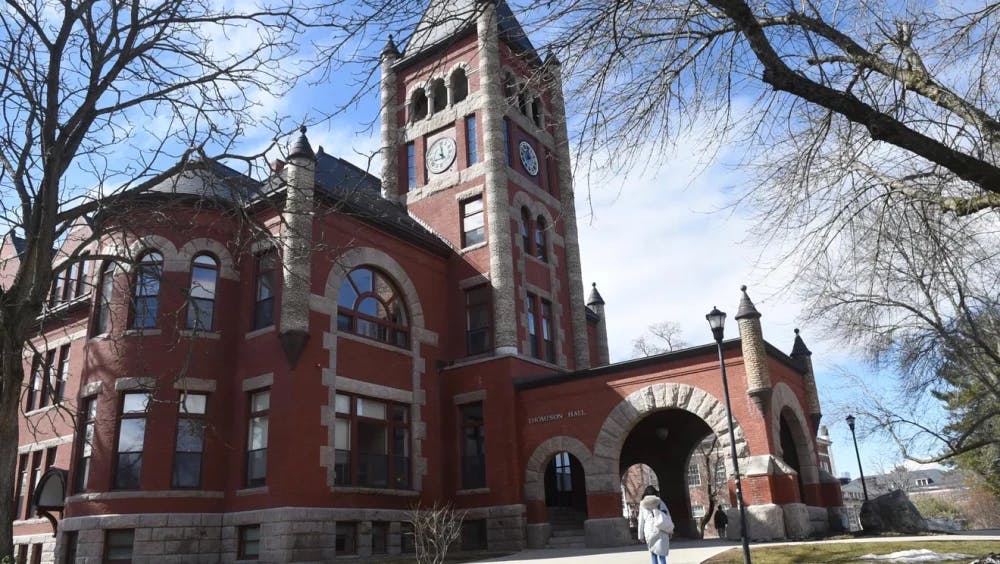
As diversity, equity, and inclusion (DEI) initiatives face increasing scrutiny and legal challenges at the state and federal levels, the University of New Hampshire is reassessing how it maintains its institutional values while remaining compliant with the law.
Earlier this year, New Hampshire lawmakers passed House Bill 2, a sweeping budget bill that includes provisions limiting DEI-related programs at public institutions. The law has since prompted a lawsuit from the American Civil Liberties Union (ACLU) and advocacy groups representing LGBTQ+ students and educators, arguing that the restrictions could harm marginalized communities and limit educational opportunities.
According to the New Hampshire Bulletin, the legislation broadly restricts DEI initiatives in public institutions, creating uncertainty across schools and universities as leaders try to interpret what is and is not allowed.
Despite this shifting landscape, UNH administrators say the university remains committed to student success, inclusion, and academic freedom.
“Diversity, equity, and inclusion at New Hampshire public institutions, and at some privates, are in flux because at the state and federal levels, these practices are being challenged,” said Dr. Nadine Petty, associate vice president for community, equity, and diversity at UNH. “Through this process, what is most central to UNH’s mission is to ensure academic freedom is protected, that student success and well-being remain at the forefront of decision making, and that all related initiatives continue to foster an inclusive campus where all employees and students, regardless of their backgrounds and identities, can thrive.”
Petty described HB2 as “vague and convoluted,” noting that some interpretations of the law appear to conflict with existing federal civil rights and equal employment laws.
“One interpretation leads us to assume the state wants us to take action that would violate existing federal Equal Opportunity in Employment laws, Civil Rights laws, and other laws on both federal and state levels,” Petty said. “Since we do not think the state wants us to violate any existing laws, UNH’s interpretation is tied to the spirit of what we believe the state is getting at, which is to uphold the anti-discrimination laws that have been on the books for decades now.”
In a December 2025 blog update, UNH leadership similarly emphasized that the university is reviewing programs to ensure compliance while maintaining its commitment to inclusion, academic freedom, and student success. The university noted that it would continue to evaluate initiatives carefully as legal challenges and guidance evolve.
According to Petty, UNH has focused on ensuring programs remain inclusive and non-discriminatory, rather than targeting specific demographic groups for state-funded services.
“What’s interesting to note here is that without programs that address diversity, equity, and inclusion that educate people and build awareness, we likely would only promote the success of white, heterosexual, cisgender men over the success of others,” Petty said. “That is what higher education was founded on.”
Petty added that eliminating DEI-related services would disproportionately affect students from marginalized backgrounds, students she emphasized are also paying customers of the institution.
“It makes no sense to take their money and then decide we will not serve their needs,” Petty said.
At the federal level, Petty said recent rhetoric and policy shifts demonstrate what she sees as a widespread misunderstanding of DEI work.
“There is little to no understanding that diversity, equity, and inclusion covers a wide swath of demographic groups,” Petty said, pointing to veterans, students with disabilities, first-generation college students, and low-income families. “Yet that is exactly what has occurred with this administration’s anti-DEI rhetoric, whether intentionally or through a trickle-down effect.”
Petty also pushed back against the idea that DEI prioritizes identity over merit.
“This is an icky and dangerous belief and far from the truth,” Petty said, citing her experience on hiring committees. “Candidates of color are often weeded out of the search process or are not chosen for hire for ‘concerns’ that are overlooked in their white counterparts.”
From a legal standpoint, Chad Pimentel, UNH’s general counsel, said the impact of recent DEI-related legislation has varied across institutions.
“New Hampshire has a long-standing law prohibiting preferential treatment based on membership in a number of groups,” Pimentel said. “That meant that some recent federal law changes, like the Supreme Court’s Students for Fair Admissions decision banning race-conscious admissions, changed nothing for UNH even though they prompted a lot of attention and changes at other institutions.”
According to Pimentel, the most significant effect has been the need for careful program review to ensure compliance with state and federal law, particularly given the lack of clarity surrounding what qualifies as “DEI-related.”
“One of the trickiest areas is determining exactly what folks mean when they say that something is ‘DEI-related,” Pimentel said. “Programs that do not have ‘DEI’ in the title could still be affected by changes in the law.”
Pimentel added that ongoing legal challenges to the state law have left the university in a “wait-and-see mode.”
“The biggest challenge is the uncertainty of it all,” Pimentel said. “Once the dust settles, UNH and other public institutions will do what they have always done, support their students within the confines of the law.”
Petty said UNH has already made limited adjustments to program language and training content in response to the legislation. One example involved revising implicit bias training to emphasize that bias is a shared human condition rather than something tied to a specific group.
“The content was clear to begin with, but we thought it was important to be even clearer,” Petty said.
Still, Petty stressed that laws cannot dictate how individuals treat one another on campus.
“The government may be able to legislate the words we use, the services we provide, and how we go about our work, but they can’t legislate how we engage with each other,” Petty said. “Our actions should be our testament, not some words on a webpage somewhere.”
Looking ahead, Petty said DEI at UNH will continue to be shaped by external forces, but the university’s core mission remains unchanged.
“We could not call ourselves a public institution if we did not work to meet the needs of all students,” Petty said. “We would find a way to reach our end goal, even if how we went about doing it needed to shift.”


