
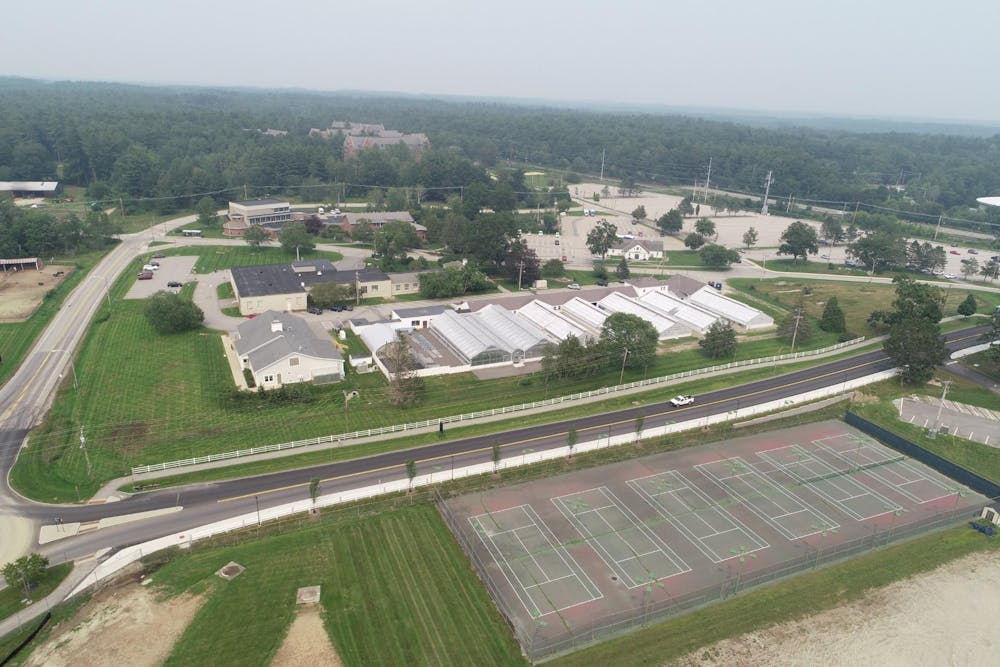
Located on the fittingly named Botanical Lane in Durham, with over 25,000 square feet of space, the Macfarlane Greenhouses are a hub for research and teaching at the University of New Hampshire (UNH). The greenhouses are home to a variety of different plant species, some for courses like the Green Thumb Workshop and others for agricultural and breeding research.
On Saturday, April 18, from 9 a.m. to 3 p.m., Macfarlane Greenhouses will be hosting their 54th annual open house event. The open house will include talks and presentations from researchers and specialists. Presentations range in topics from raising healthy transplants to preventing and managing common plant diseases. Students and community members are invited to attend and learn more about the research and innovation within the greenhouses.
The main branches of UNH associated with the greenhouses are the New Hampshire Agricultural Experiment Station and the College of Life Sciences and Agriculture (COLSA).
Greenhouse Manager Matt Biondi took The New Hampshire (TNH) on a tour of the greenhouses. Biondi has been working for Macfarlane Greenhouses for just under three years, and was drawn to Macfarlane’s research programs: “It was very exciting to see a place dedicated to research and helping the local community through agriculture,” said Biondi.
A current research project in the greenhouse—UNH Cucurbit Breeding—is spearheaded by Dr. Chris Hernandez. This program is one of the longest-running cucurbit research programs in the United States.
“The Cucurbitacea family is home to a number of economically important vining crops, including cucumbers, pumpkins, summer/winter squash, watermelons, and muskmelons,” said an excerpt from the program’s site.
Dr. Hernandez and his team are working to develop new melon, squash and other cucurbit varieties that have a longer shelf life and higher nutritional content. Additional research in the greenhouse is aimed at building disease resistance in cucurbit species.
“Agriculture is an exciting world to be a part of, technology is changing every day, and new techniques are allowing us to build a more resilient food system for the future,” said Biondi. “I hope people can come [to the open house] to learn why this research is so important and get excited about agriculture”.
To learn more about the research and researchers at Macfarlane Greenhouses, you can visit their website and attend the April 18 Open House.


