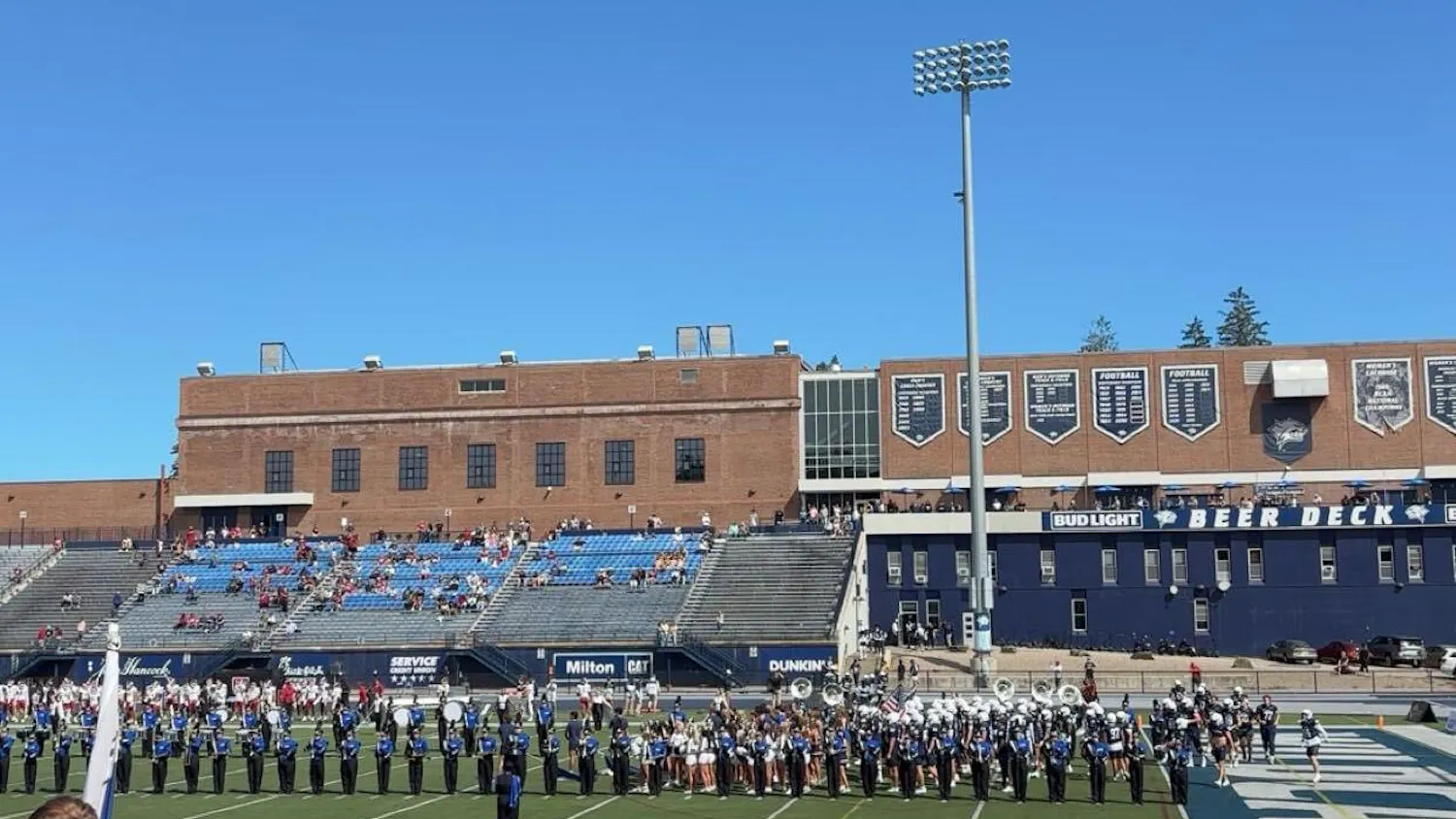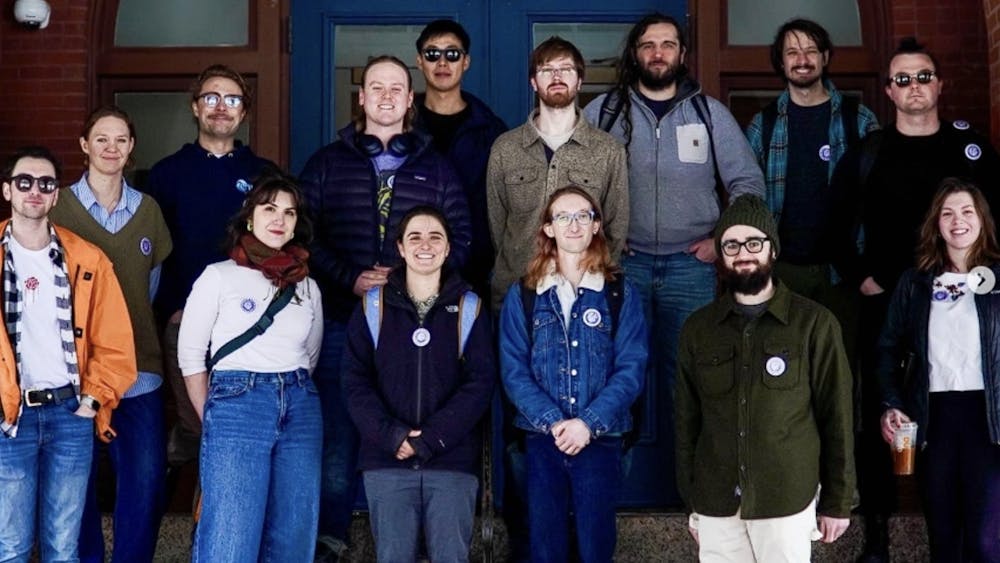
On Feb. 10, 2026, UNH graduate student workers attended the President and Provost’s State of the University Presentation. President Chilton discussed the university’s achievements with an emphasis on being an R1 institution and the notable research that is done by graduate workers.
Members of the Union walked out and called on other students and staff to join them. “None of the excellence that you described or the goals would be possible without the labor of graduate workers. Yet, we are paid poverty wages,” said Jed Seibert, a PhD student in the Forestry program, and member of the union and Bargaining Committee since 2021.
“I think it makes them a little uncomfortable, and if that's what it takes for them to come to the table in good faith and meaningfully engage with our proposals, then I'm all for it,” said Sam Crawford, a PhD student in the Sociology department, and member of the union’s Bargaining Committee.
Representative Heath Howard (D-NH) agreed that there needs to be pressure put on the university system. “The University of Connecticut, their stipends that they provide to their grad students, I believe is upwards of $40,000 a year. Here at UNH, it's $22,000. It's a very significant jump if we're even comparing just in-state universities here in New England.”
According to The Laconia Daily Sun, as of 2025, a single adult with no children needs an annual salary of $101,774 to live comfortably in New Hampshire. UNH graduate student workers are paid a tiny fraction of this for their rigorous work and research.
Many graduate student workers, such as Crawford, are in their early thirties, and the fact that the university just recently struck parental leave from the union’s proposal entirely is incredibly concerning.
As of August 2025, the union’s non-economic proposals, which include things like workplace protection and grievance process, were tentatively agreed upon with the university. Currently, graduate student workers are working towards progress for the economic articles, which include wages, housing, health benefits, and insurance.
Seibert said, “I talked to somebody recently who told me how he is choosing between buying food for his family or medicine for his kid. And for them to come back and offer us nothing in return is frustrating.”
Many undergraduate students are not aware that the teaching assistants in their lectures or labs are dealing with these conditions while simultaneously trying to serve their students as effectively as possible.
“I really care about the undergrad experience here, and the better we are treated, the more energy we’ll have to devote to make everybody’s experience worthwhile here,” said Seibert.
Kadienne LaPointe, an Organizer and Bargaining Committee member of the Graduate Student Union, as well as Communications Officer for the Graduate Student Senate, said, “It is something that impacts all of us, and we really do rely on the support of ally undergraduates and ally faculty who care that we have good working conditions so that we can make this place run smoothly.”
Tim Hoheneder, Earth and Political Sciences Doctoral Student and External Relations Officer for the Graduate Student Senate, said the administration boasts about how much they love graduate student workers and they are such a critical part of the university, but, “when it comes to the bargaining table and showing love and affection to us and that we matter, the university has repeatedly come back and said, no, you’re not worth it.”
The UNH Graduate Student Union has continued to evolve in its advocacy efforts this year, using social media, walk-outs, and other campaigns to continue to pressure the administration to improve working and living conditions.
LaPointe said, “I have been really impressed with people's leadership this year. I think they're really stepping up our social media presence and community-building efforts. We've been doing art builds and inviting people to come out for all sorts of various events and meetings, just so that there's greater transparency in the work we're doing.”
Crawford acknowledged that President Chilton and graduate student workers have shared goals: producing quality research, creating new scholars, and teaching undergraduates. They also said they would not want a PhD from an institution that is not an R1 university. Yet, there is still this disconnect between what the administration is saying and what they are doing. And graduate student workers are not going to back down, continuing to advocate publicly for what they deserve.
Crawford said, “If you ask me, in my personal capacity, do I want to do stuff like this every day? The answer is no, because it's uncomfortable sometimes, and it's ultimately annoying, but I will be the first person in line to do that kind of thing every time, until we get what we need.”