
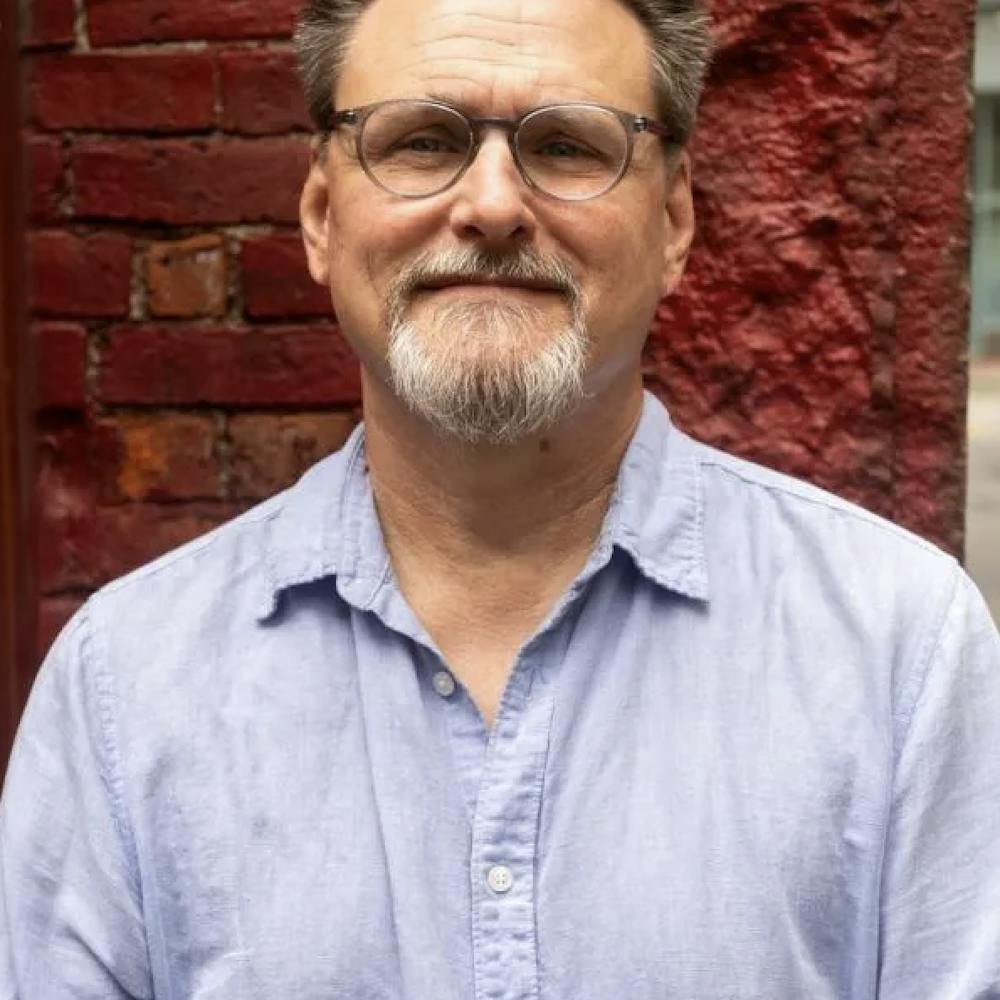
This semester’s Spring Writers Series opened on Feb. 5, with University of New Hampshire (UNH) alumni James Sullivan.
Sullivan is a successful journalist and pop culture enthusiast who rose from his beginnings as an underestimated student to become a writer and editor for some of the country’s most prominent newspapers. In his presentation, Sullivan discussed the motivation and discipline at the root of his achievements, his passion for societal protest and social justice, and his enduring hope for the future of journalism.
James Sullivan is a former writer and critic for the San Francisco Chronicle, where he employed his passion for music and the arts to produce articles examining the American culture that shapes our lives. He is also a longtime contributor to The Boston Globe and a former editor at Rolling Stone. Sullivan has written five books exploring music, comedy, sports and the underlying themes and movements that make these cultural forms meaningful.
While continuing his self-employed writing career, Sullivan works in the journalism department at Emerson College, where he serves as a faculty advisor for the university newspaper, The Berkeley Beacon. He is also the program director of the Newburyport Documentary Film Festival and a co-founder of Lit Crawl Boston.
Speaking to a crowd of roughly 30 dedicated writers, Sullivan delivered a comical presentation detailing the path that led him to freelance writing and the defining moments of his career. He read passages from his books “7 Dirty Words: The Life and Crimes of George Carlin” and "Which Side Are You On? 20th Century American History in 100 Protest Songs,” but focused primarily on relaying encouragement and advice to students who, like himself, have been sold the enduring narrative to avoid journalistic and creative writing programs.
In a pre-event interview, when asked about his early writing life and inspiration, Sullivan evoked memories of the paper route he had as a 12-year-old kid, which encouraged him to spend time reading the news and sparked his dream of becoming a journalist.
“I read that paper religiously, as well as Rolling Stone and Sports Illustrated,” Sullivan said. “I knew I didn’t want to be on stage and wasn’t good enough at baseball to succeed beyond the youth leagues. As an avid reader, I knew instinctively that I wanted to be a journalist, with bylines in those magazines, telling the stories of the newsmakers.”
Audience members, primarily MFA students focused on building careers from their work, were particularly interested in Sullivan’s process for pushing through long-term projects and his thoughts on the changing landscape of writing, especially amid recent downsizing at The Washington Post.
Sullivan discussed the self-discipline that has enabled him to pursue a freelance writing career, one that requires balancing several projects at once and setting daily goals of achievement. When asked about the skills shared between journalistic and book writing, he emphasized the importance of curiosity and concentration.
“In comedy, they call it a ‘commitment to the bit’—being fully invested in the thing you’re doing,” Sullivan said. “Each time I’ve written a book—and each time I write another news article—I’m fully immersed in the subject matter.”
While some journalists are pessimistic about the future of the field, particularly with the growing presence of artificial intelligence, Sullivan reinforced a sense of excitement for students in the program. He views journalism as an ever-changing field that will continue to rely on innovative voices.
“I try to instill a positive outlook in my students about the future of journalism,” Sullivan said. “We all know the industry is changing in ways that seem unrecognizable to people my age. It’s the next generation’s responsibility to help shape the craft of journalism as it will exist 20 or 30 years from now. That, to me, is exciting.”
Throughout his career, Sullivan has focused on the influence of the arts on a shifting culture and the unifying impact of protest through creative outlets. He believes this remains a vital subsection of art that continues to challenge and push against governmental decisions.
“I think that arts and culture are just as relevant and important to all of us as the front-page news,” Sullivan said. “The creative fields are where voices get heard and we tell the stories that sustain us. The arts help us build a sense of community, which is more important now than ever. Whether I’m writing about comedy or the hidden messages in popular music or the symbology of a simple pair of jeans, I hope that anyone reading will see how culture is indispensable to our democratic ideals.”
The next segment of the Spring Writers Series will take place March 12 with fiction author Chris McCormick.


