
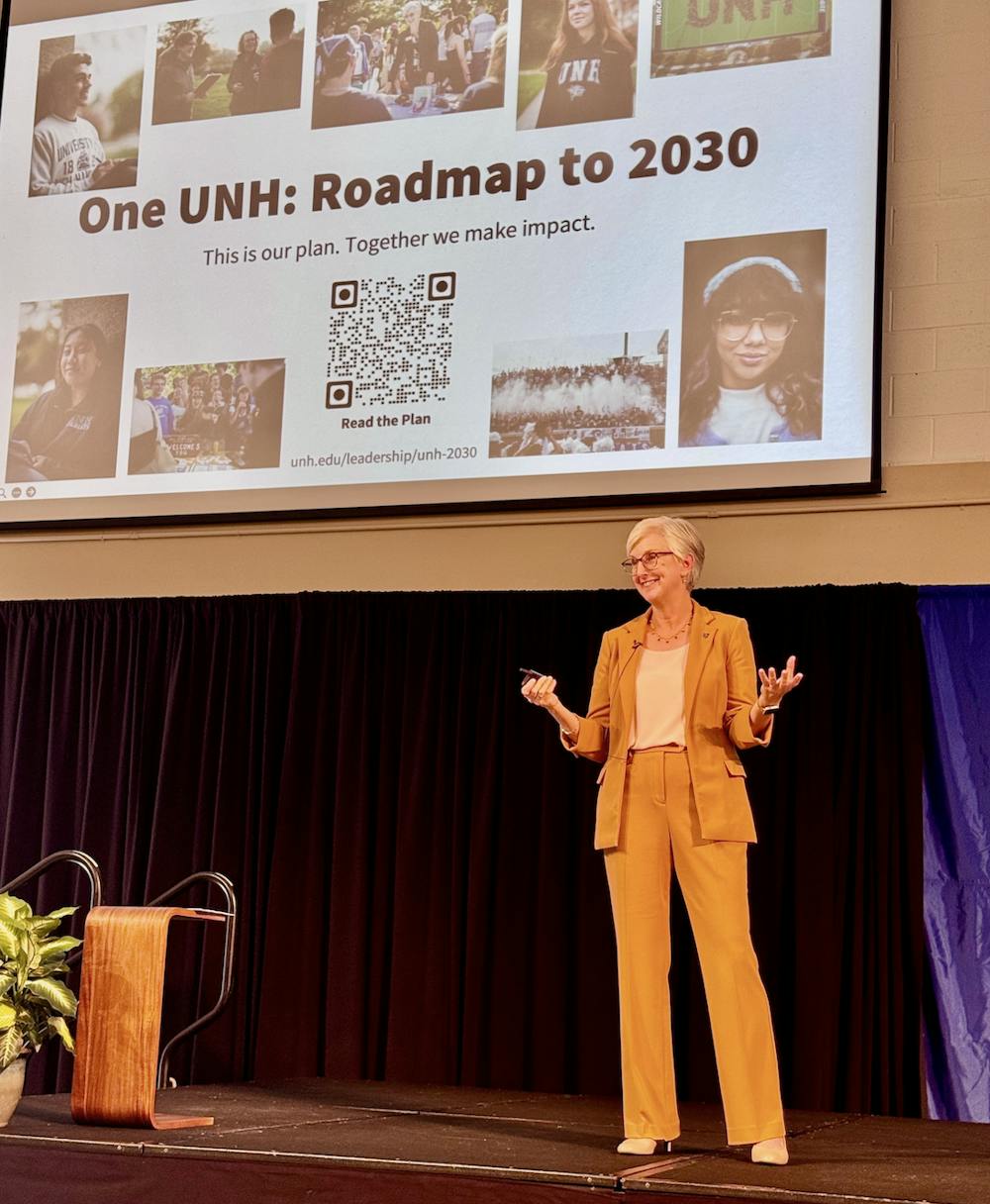
University of New Hampshire’s (UNH) administration and faculty from around the state gathered on Oct. 7 in the MUB’s Granite State Room to hear President Elizabeth Chilton discuss UNH’s next five-year strategic plan. Around 600 more attendees tuned in online. All gathered to eagerly learn more about how UNH plans to strategize its finances in the midst of a rough economic environment for higher education.
In her opening remarks, Chilton stated she wants to make future decisions with “clarity and intention.” She stressed that she wants to focus on more efficient spending and locate areas of university spending that aren’t necessary. However, the plan isn’t meant to specify areas that could be cut, but instead is meant to serve as a way of keeping track of UNH's progress as it manages the harsh economic climate. This means moving away from incremental spending plans and turning to looking for new sources of revenue and monitoring spending more efficiently. Chilton estimated that the roadmap will be finalized by January.
“We are not able to grow our way out of these challenges…instead, we need to make decisions to balance the revenues we have,” Chilton emphasized in her introduction.
Chilton was joined by Chief Marketing Officer Danielle O’Neil, as well as Dean for the College of Engineering and Physical Sciences Cyndee Gruden. Together, they spoke on launching a plan at a time of “immense challenge and opportunity” and highlighted the main factors that have contributed to an economic decline for higher education.
What are some of the factors?
Statistics from the USNH 2024 annual financial report show that student enrollment has steadily declined by 11.1% since fiscal year 2020 for all institutions combined. This is said to be caused by a shift in how people prioritize college and how much higher education is valued, along with the inevitable decline in birth rates.
Chilton spoke about the long-term effects of declining birth rates, which began around the 2008 financial crisis, when many chose to have fewer kids. This demographic shift has now resulted in fewer college-age students nationwide and has directly impacted enrollment at UNH. As a result, the university is currently grappling with decreased student enrollment and a subsequent decline in tuition.
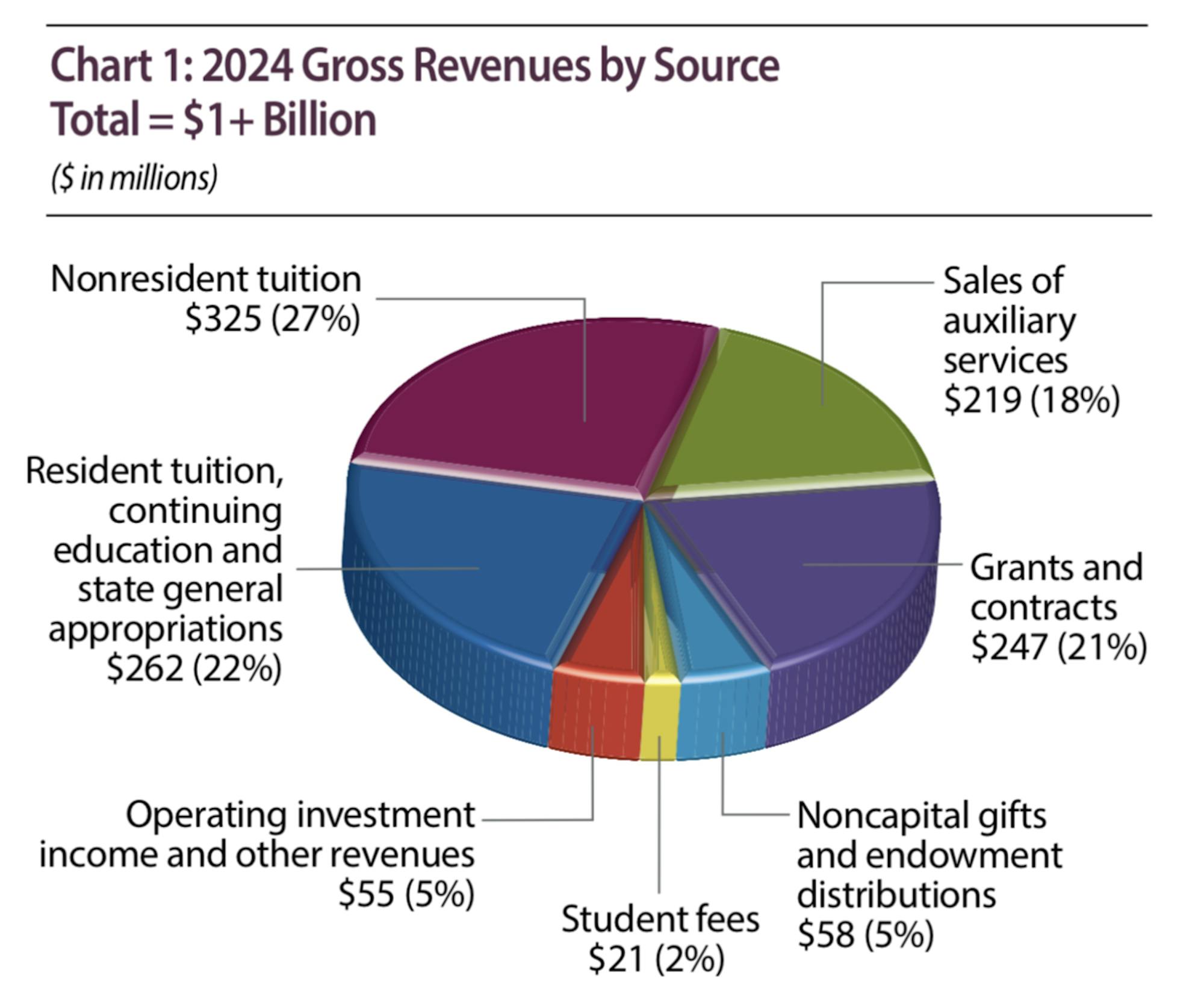
This is especially a problem for the university as UNH is heavily reliant on enrollment-related revenue, which includes tuition, room and board, and fees. According to the financial report, USNH's total operating revenues for the 2023-2024 fiscal year amounted to $1.2 billion. This figure encompasses all sources of revenue, such as tuition, fees, room and board, grants, and state appropriations.
According to a study done by the New Hampshire Fiscal Policy Institute in 2025, New Hampshire public colleges get 75% of revenue from student tuition, in comparison to the 39% of revenue nationally.
Chilton highlighted the adverse effects COVID had on the university by stating that the pandemic decreased enrollments greatly and fueled speculation about the value of a college degree. She characterized the pandemic as a “factor that really exacerbated the headwinds that we were already facing.”
“It exposed the vulnerabilities of universities that are tuition dependent,” Chilton said.
As Chilton discussed the economic challenges currently facing UNH, she repeatedly mentioned the “demographic cliff,” which is predicted to affect the university in the coming years. The term refers to the projected steep drop-off in the number of people entering a certain age cohort (in this case, 18‑year‑olds), driven by sustained low birth rates, which leads to fewer college applicants and ultimately fewer graduates. Chilton attributed the university's financial challenges and enrollment decline to this predicted cliff.
When this trend inevitably continues, Chilton emphasized that UNH will need to be a smaller institution in just a few years. This is where the roadmap comes in.
What makes up the roadmap?
Chilton pointed out that the main reason for needing the roadmap is that people are paying more attention to how much higher education costs. But she pushed back on that idea, saying UNH needs to show prospective students, residents, and policymakers that the university offers more than just a price tag.
“We can and need to do more to demonstrate the outcomes of the impact that we have,” Chilton said.
President Chilton ended her introduction speech and handed the mic off to Danielle O’Neil to discuss the structure of this roadmap. O’Neil discussed the first two “pillars” of this roadmap.
The plan was organized around four interconnected strategic priorities:
- Strengthening UNH’s Impact
- First Choice Destination
- Interdisciplinary Teaching and Research Excellence
- Commitment to Well Being and Belonging
Access to the strategic plan can be found here.
The first priority, strengthening UNH’s impact, centers around providing more career opportunities for students and putting a bigger focus on funding academic research. Their second priority focused on making UNH a “first choice destination” through which the university would be seen as more of an inclusive and accessible college for prospective students. The third priority, interdisciplinary teaching and research excellence, would concentrate on a select few distinctive programs that boost the university’s reputation and standing in a competitive market for students, faculty, and funding. The university’s last priority, commitment to well-being and belonging, aims to ensure fair access to health services, supporting employees and students, and fostering collaboration with health networks.
“More than just a document, it’s a way to make sure that the decisions that we take are connected to our mission of education, purposeful research, and service to our state,” O’Neil stated while discussing the roadmap. The document was made by 40 committee members and included input from students and faculty across the institutions. O’Neil emphasized the importance of allowing everyone to contribute.
Dean Cyndee Gruden continued the presentation. She specified that the university needs to boost its reputation, attract resources, and emphasize a necessity for their research to translate into impact. She further stated the need to invest in distinctive programs to properly stand out amongst other institutions.
Gruden said that the planning committees will reconnect this fall under the guidance of the co-chairs from each committee in order to identify concrete actions and measurable metrics for the plan.
“Imagine a plan where university-level goals are so clearly defined, its progress so closely tracked, that everyone in the community can see how we move forward together,” Gruden said.
During Chilton's closing remarks, she asserted that the university needs metrics to see if they are achieving the goals that it set out. She aims for the institution to become a first-choice destination for prospective students that will highlight the value of higher education to the state.


