
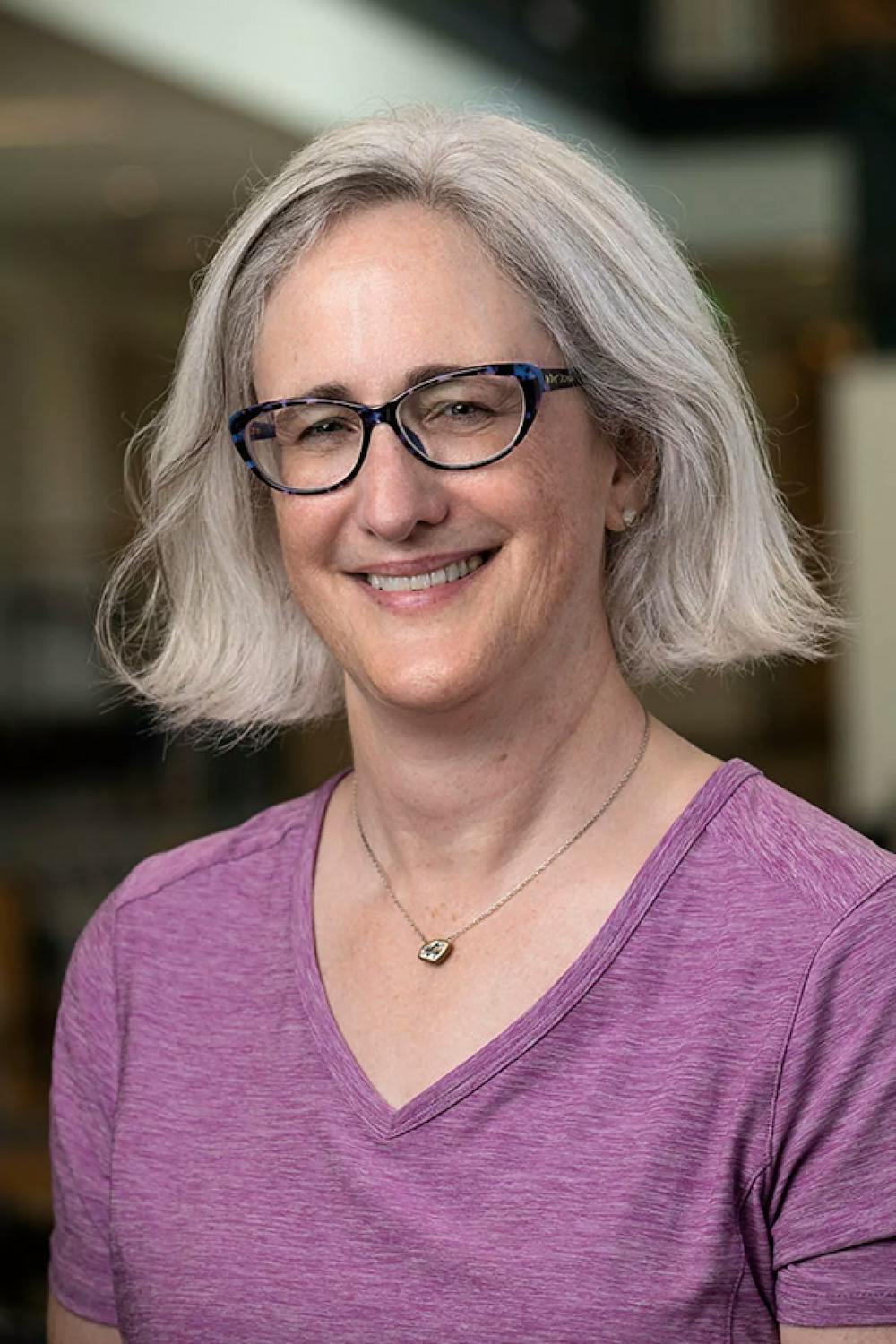
After 25 years of teaching, Siobhan Senier, the chair of UNH’s women’s and gender studies (WGS) program, announced she will retire at the end of this academic year. Senier received her doctorate in English from the University of Illinois at Urbana-Champaign. She came to UNH in 2000 to teach Native American Literature.
Senier expressed that her decision to retire ultimately stems from her frustration with changes occurring at the heart of UNH. When Senier first began teaching, there were 44 full-time employees. She said the English department, though under increasing budget pressures, was incredibly stimulating. In the last five years, Senier has seen a drastic change in regards to faculty ranks, material support, and opportunities to collaborate with internal and external partners.
Currently, UNH is anticipating a $15 to $20 million budget cut for the next academic year. Senier stated that the university has reallocated its budget away from instruction and research in favor of areas like marketing, surveillance, policing, and subpar software, which complicates tasks for her and other faculty.
Last May, a pro-Palestinian protest on Thompson Hall Lawn resulted in the arrests of 12 UNH students and allegations of police brutality. “For me, that felt like the straw that broke the camel's back,” said Senier. “There are still many good people at UNH. I just can't feel good, myself, about working here anymore.”
Senier said her initial switch from English to UNH’s WGS department was natural. “WGS was so intellectually and personally collegial to me,” said Senier.
WGS has ultimately changed due to being considerably more diverse, topical, and up-to-date. Some classes for the major include trans memoir, reproductive justice, weightism, disability studies and women of color feminism. The WGS frequently partners with different majors, often due to their size and often even budget cuts. Students typically end up double majoring, while landing excellent occupations such as computer design and domestic violence support.
Guiding students, Senier expressed, led to some of the finest moments of her career. She highlighted a project on Wikipedia and electronic archiving that connected students to Native American communities. During the project, students even had the opportunity to work with Indigenous writers who did not have entries on Wikipedia.
Archiving indigenous history assisted students in creating well-researched, public-facing and ethically responsive content on the site. It also helped to digitize and create web-based exhibits of historic tribal newsletters.
Senier, who serves on the American Association of University Professors’ New Hampshire chapter (AAUP-UNH) executive committee, is deeply committed to supporting student development. However, her most memorable accomplishment, she said, is the opportunity to edit “Dawnland Voices”, a 700-page book written by Indigenous people from the New England area.
“It was incredibly humbling to be able to work with those people and produce something that seems meaningful to their communities,” said Senier. She expressed that working with 11 other tribal editors was a gift.
Senier especially values rich classroom discussions. She expressed that she feels at peace, leaving behind the distraction of cellphones, as she noted they significantly affect students’ ability to focus and learn. Senier said it brings her joy to know she has the ability to create an accessible class environment for those who are facing a variety of challenges, including mental and physical struggles and complex schedules.
Although Senier is retiring from UNH, she plans to plant her feet in an executive director position later in the summer for 350NH, a grassroots movement for climate justice and renewable energy in New Hampshire. “I'm very much looking forward to that work,” she said.


